1900: Belgian
Town, Hazel Hurst, PA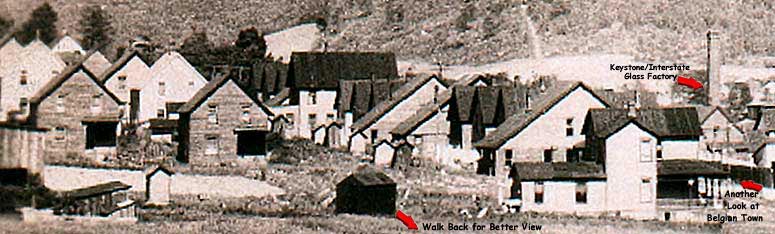
photo credit: John Coleman Collection
To This Site In 2001
In connection with the Keystone and Interstate plants,
there grew a sizable community across the valley from the rest of Hazel
Hurst. This group of houses acquired the name "Belgian Town" and
was probably made up of over 50 houses by about 1920. Today there
are not more than 6 of these homes remaining. The name came from
the fact that in most of the early glass factories, Belgian glass workers
were very prominent. They or their parents had come from Belgium
to work at the glass blowing trade, and they have left their influence
in all the towns where they settled. Belgian glass blowers brought
with them the custom of adding salt to their tea or coffee to help overcome
the salt loss from their bodies due to being exposed to the heat from the
furnaces. It was almost 30 years later that industries began to give
their workers who were exposed to heat, salt tablets to accomplish the
same result.
Being a rather boisterous group, the Belgians are credited with many
stories of fights, severe arguments and a few knife battles that took place
between the glass workers. As was common to all towns with glass
factories, the blowers, cutters and flatteners in the window glass plants
and their counterparts in the bottle factories had very strong unions.
Those unions, dating back to about 1880 as the "Knights of Labor", had
a lot to do with setting the wages, establishing working conditions, and
selecting employees before 1900 and much more after that. The unions
also kept records of plants that needed workers and supplied workers for
any plant that might need them.
Belgian Town
2001
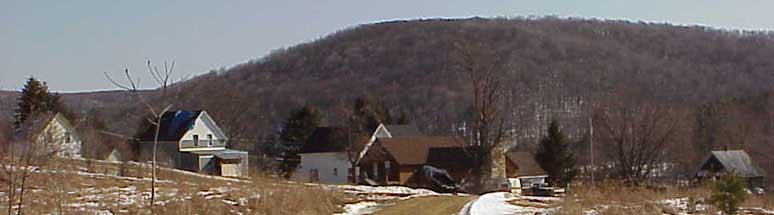
photo credit: Jeremiah Vandermark
2001
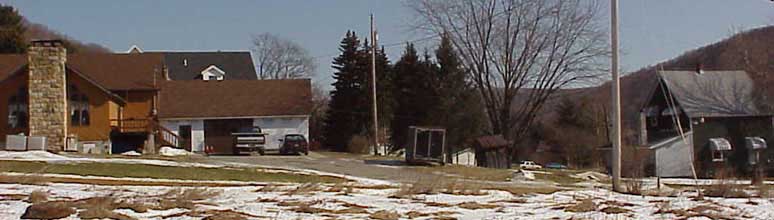
photo credit: Jeremiah Vandermark
2001
Back To Virtual
Tour